Iron is one of the body’s most essential minerals. It plays a critical role in producing hemoglobin, the protein in red blood cells responsible for transporting oxygen throughout the body.
When iron levels become too low, the body cannot produce enough healthy red blood cells, resulting in iron deficiency.
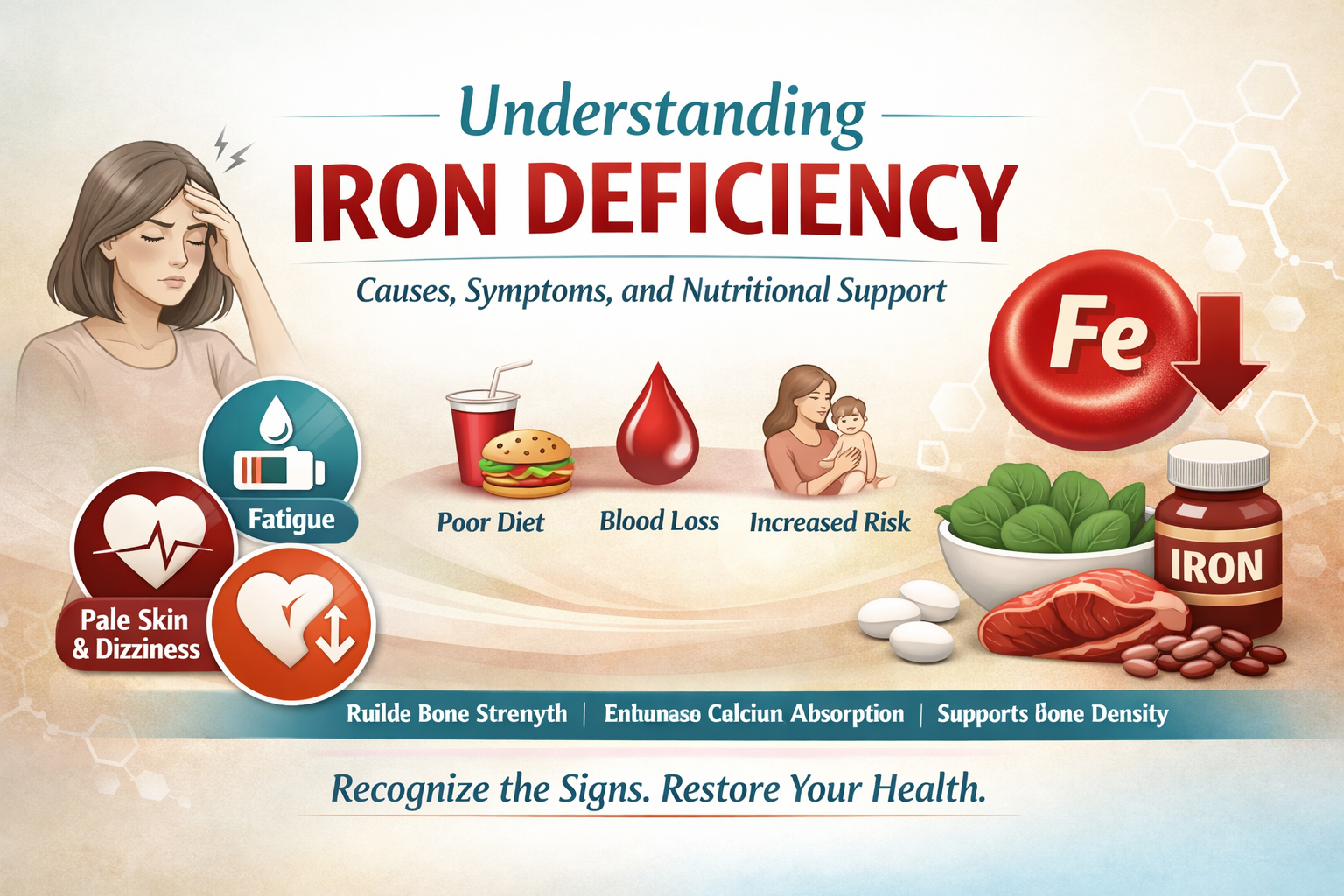
Common Causes of Iron Deficiency
Iron deficiency can occur due to:
- Poor dietary intake
- Increased nutritional requirements
- Pregnancy
- Heavy menstrual bleeding
- Blood loss
- Certain digestive disorders affecting iron absorption
- Common Symptoms
People with iron deficiency may experience:
- Persistent fatigue
- Weakness
- Pale skin
- Shortness of breath
- Headaches
- Difficulty concentrating
- Reduced physical performance
If these symptoms persist, medical evaluation is recommended to determine the underlying cause.
Why Iron Matters
Adequate iron levels support:
- Healthy oxygen transport
- Energy production
- Cognitive function
- Physical endurance
- Healthy immune function
- Getting Enough Iron
Iron can be obtained from foods such as:
- Lean red meat
- Poultry
- Fish
- Beans and lentils
- Spinach
- Fortified cereals
Vitamin C-rich foods may help improve iron absorption when consumed alongside iron-rich meals.
When Supplementation May Be Needed
Some individuals may require iron supplements if dietary intake alone is insufficient. Supplementation should always be taken according to the advice of a healthcare professional, as excessive iron intake may have adverse effects.
Supporting Better Health
Maintaining healthy iron levels is essential for energy, productivity, and overall well-being. Early recognition of iron deficiency and appropriate nutritional support can help restore healthy red blood cell production and improve quality of life.